
WORTHIVO OF THE WEEK · Week 34 · 2026 · ARCHIVE
EcoFlow DELTA 3 Plus review: who should buy it—and who should skip it
The headline number is 1,800 watts. The buying decision is whether a 1,024Wh energy budget fits the devices and outage time you actually need.
Worthivo
Conditional
Good — but only under one condition.
The evidence runs favourable except for a named group of buyers. The review identifies that group in an 'if you' sentence. If you belong to that group, this is the wrong product. Outside that group, the verdict is a yes on the evidence examined.
How we got there
- We read what owners actually report, across sources that do not copy each other.
- We check the buzz is real before it counts — a marketing budget can buy discussion.
- We look for what would prove us wrong, and publish it either way.
- We distinguish our judgment from source reports, and publish the limits.
Worthivo has not hands-on tested this product. Read how we choose.
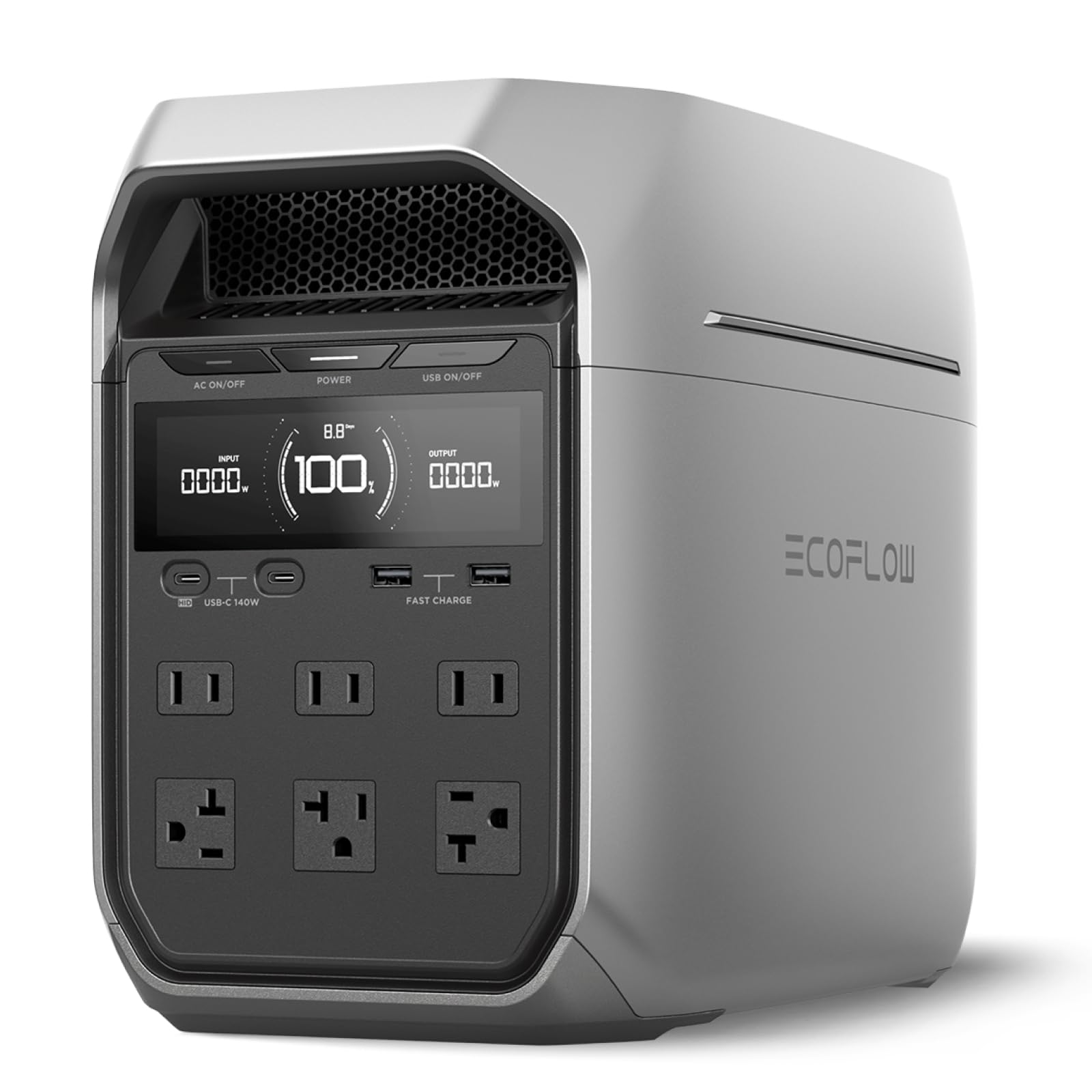
Exact model shown · DELTA 3 Plus · ASIN B0DCC2BVFW
The image above is a paid link. As an Amazon Associate, Worthivo earns from qualifying purchases, and your price stays the same.
Worthivo Conditional
Worthivo conditionally recommends the EcoFlow DELTA 3 Plus for attended portable power and bounded backup use, because independent tests and owner accounts support its output and transfer performance while long-dated owner evidence shows that continuous unattended backup requires runtime validation, periodic state-of-charge recalibration, and acceptance of output-state and heat-management friction.
The condition: The buyer needs attended portable or short-duration backup power, can verify runtime under the actual load, and accepts periodic full-cycle state-of-charge recalibration; the product is not recommended as a set-and-forget UPS for unattended critical equipment on the retrieved evidence.
Verdict recorded .
VERIFIED PRODUCT FACTS
What the product is—before the marketing does the talking.
Battery capacity
Manufacturer specification; usable AC energy is lower after conversion and standby losses.
Rated AC output
Manufacturer specification; 3,600W surge is separately claimed.
Output ports
Includes two manufacturer-rated 140W USB-C outputs.
UPS switchover claim
Manufacturer claim under stated conditions—not a Worthivo reliability guarantee.
Listed weight
Portable, but not a light everyday carry.
Listed warranty
Confirm current regional terms before purchase.
BUY IF
This sounds like your real routine.
- You can list the devices you need to run, their watts, and a realistic outage duration.
- Fast recharge and a mix of AC and high-output USB-C ports matter to your workflow.
- You want a movable battery for a home office, camping, an RV, or short household interruptions.
- You accept that firmware, state-of-charge calibration, standby draw, and battery care are part of ownership.
SKIP IF
The compromise lands in the wrong place.
- You need automatic whole-home backup or multi-day capacity without load management.
- A power interruption could create a medical or life-safety risk; use equipment designed and certified for that job.
- You expect the 1,024Wh label to equal 1,024Wh delivered from the AC outlets.
- You want silent, zero-loss pass-through operation with no monitoring or firmware attention.
CURATED FROM OWNER DISCUSSIONS
What owners keep bringing back into the conversation.
The themes below are what owners keep returning to—the situations, habits, and expectations that decide whether this product suits a particular buyer. Some rule a buyer out. Some are the kind of recurring problem that would move a verdict, and where that is the case the page says so. Follow the links and judge the context yourself.
Budget the delivered energy, not the label
Owners discuss idle draw and battery drain while devices stay connected. The practical lesson is to plan around energy actually delivered after conversion and standby losses. That rules out the buyer who wants to size an outage from the nameplate figure alone; it suits anyone willing to spend ten minutes on a load list.
Read the owner discussion (opens in a new tab)State-of-charge readings reward a test routine
A detailed owner report describes unexpected shutdown behavior and recalibration attempts. One experience is not a failure-rate estimate, and for most owners a periodic test settles it. It rules out the buyer who wants to store the unit untouched and trust it months later without checking.
Read the owner discussion (opens in a new tab)Test UPS behavior before you depend on it
Recent community troubleshooting includes firmware and UPS reports. Worthivo cannot say how common they are, and for most buyers it does not need to—testing your exact load once answers the question. It rules out anyone who needs certified, unattended switchover for equipment that must never drop.
Read the owner discussion (opens in a new tab)BEFORE YOU BUY
Four questions that matter more than a sale badge.
- What must stay powered—not what would merely be convenient?
- How many watts does that load draw continuously and at startup?
- How long does it need to run before grid power or another charging source returns?
- Can you test the complete setup monthly and after firmware changes?
READY TO CHECK THE EXACT MODEL?
EcoFlow DELTA 3 Plus
Worthivo does not display a cached price, availability claim, rating, or review count. Confirm the current offer, seller, delivery terms, warranty, and return policy on the listing.
As an Amazon Associate I earn from qualifying purchases.
SOURCES & LIMITS
Trace the decision.
- EcoFlow DELTA 3 Plus official product page (opens in a new tab)
- Amazon exact model listing, ASIN B0DCC2BVFW (opens in a new tab)
- CPSC recall record for the EcoFlow Delta Max 2000, a different model, checked August 23, 2026 (opens in a new tab)
Specifications and policies can change. Owner sources were used to identify questions and recurring friction, not to calculate prevalence. Last editorial review: August 17, 2026.