
-
Step 1 of 10
Decide what kind of night you are having
A party, a doorstep, a trick-or-treat route, a night out and a night in each need different things. Choosing first keeps you from buying for a night you are not having.
Before you move on
- You know which kind of night you are having
- Saturday, Oct. 31 and the clock change early Sunday, Nov. 1 are on your calendar
- You will check your town's trick-or-treat hours in October
Why, and what the sources say
Halloween 2026 falls on a Saturday, and daylight saving time ends that night. NIST gives its end in 2026 as 2 a.m. local time on November 1, which is a Sunday; that is when clocks go back one hour.
Trick-or-treat hours are not set nationally. Many cities and towns announce suggested hours themselves, some only in the second half of October: Baton Rouge, for example, announced its 2025 hours on October 22, 2025. Check your own city or town's announcements in October.
Once you know the night, the list at the top of this guide shows which steps matter for it. Everything else is optional.
Sources for this step
- NIST: Daylight saving time (opens in a new tab) (National Institute of Standards and Technology, updated February 9, 2026)
- City of Baton Rouge: 2025 trick-or-treat hours (opens in a new tab) (City of Baton Rouge and Parish of East Baton Rouge, October 22, 2025)
-
Step 2 of 10
Choose costumes and faces early, then check fit, fabric, visibility and makeup
Order early enough to exchange a wrong size, then check four things before the night: that it fits, how the fabric behaves near a flame, whether the wearer can be seen, and what is going on their face.
Before you move on
- The costume fits and clears the ground
- The label says flame resistant, and loose fabric stays away from flames
- Reflective tape is on the costume and the treat bag
- Makeup is patch-tested, and nobody wears lenses without a prescription
- Any pet costume has been tried on, and the pet is comfortable in it
Why, and what the sources say
CPSC advises a costume that fits, with nothing so long or baggy that it trips the wearer, and keeping loose, flowing fabric away from open flames. It says polyester or nylon are preferable to sheer cotton or rayon, and that any fabric can burn if it touches a flame. The FDA and the American Academy of Pediatrics both say to look for “flame resistant” on the label, and the AAP extends that to wigs and accessories. Fabric alone does not settle it: in July 2024 CPSC announced a recall of polyester witch hats sold at Claire's and Icing that failed the federal flammability requirement.
Make the wearer easy to see. CPSC, the FDA and Safe Kids all suggest bright or light colors and reflective tape on costumes, and Safe Kids adds tape or stickers on treat bags. CPSC says a mask's eye and nose holes should allow full visibility and adequate breathing, and all three suggest makeup as the alternative where a mask gets in the way.
Treat face makeup as a product with rules. The FDA says every color additive in cosmetics must be approved for its use, and a color allowed on nails or hair may not be allowed on skin; its Summary of Color Additives shows which colors may go near the eyes. It says no fluorescent color is approved for use near the eyes, and that the only glow-in-the-dark color it approves, luminescent zinc sulfide, is for limited use and not near the eyes. Test anything new on your skin first: the FDA's novelty-makeup page suggests a dab on the arm for a couple of days, and its Halloween update says 24 to 48 hours ahead.
Skip colored contact lenses bought without a prescription. The FDA says every contact lens, decorative ones included, must be prescribed, that a seller who does not ask for a prescription is breaking federal law, and that the risks include a scratched cornea, infection and blindness. It warns specifically against buying them from Halloween shops, novelty stores and unknown online sellers.
Dress a pet only if it is comfortable. The ASPCA says a costume must not restrict the animal's movement, sight, breathing or ability to bark or meow, should have no loose or dangling pieces it could choke on, and should be tried on before the night.
Sources for this step
- CPSC release 23-014: Halloween safety tips (opens in a new tab) (US Consumer Product Safety Commission, October 18, 2022)
- CPSC recall 24-299: polyester Halloween witch hats sold at Claire's and Icing (opens in a new tab) (US Consumer Product Safety Commission, July 11, 2024)
- FDA: Halloween safety tips for costumes, candy and colored contact lenses (opens in a new tab) (US Food and Drug Administration, content current as of October 19, 2023)
- FDA: Novelty makeup (opens in a new tab) (US Food and Drug Administration, content current as of November 22, 2022)
- FDA: Decorative contact lenses for Halloween and more (opens in a new tab) (US Food and Drug Administration, content current as of October 22, 2024)
- HealthyChildren.org: Halloween safety tips (opens in a new tab) (American Academy of Pediatrics, copyright 2025)
- Safe Kids Worldwide: Halloween safety tips (opens in a new tab) (Safe Kids Worldwide, no date shown)
- ASPCA: Halloween safety tips (opens in a new tab) (ASPCA, no date shown)
-
Step 3 of 10
Plan the night itself: in, out, or on the doorstep
Pick the evening's one main thing and prepare for that, rather than a little of everything.
Before you move on
- You have picked the one main thing
- Times are checked on the organizer's or broadcaster's own page
- Children under 12 have an adult; older children have a group, a route and a time home
Why, and what the sources say
Staying in needs little more than a plan: a film, a pumpkin-carving session or a costume dinner, and a quiet room for the pets. If you want to watch something in particular, check the network's or streaming service's own schedule page, because lineups and free-viewing windows change from year to year.
Going out to a public event, a trunk-or-treat or a haunted attraction? Check the organizer's own page for times, age guidance and costume rules, and plan how everyone gets home.
If children are trick-or-treating, Safe Kids advises an adult with any child under 12, and says older children going without an adult should stay in familiar, well-lit areas and go in groups. The AAP adds a planned route and an agreed time to be home.
Sources for this step
- Safe Kids Worldwide: Halloween safety tips (opens in a new tab) (Safe Kids Worldwide, no date shown)
- HealthyChildren.org: Halloween safety tips (opens in a new tab) (American Academy of Pediatrics, copyright 2025)
-
Step 4 of 10
Dress the yard so it survives wind, rain and people walking past
CPSC counts putting decorations up and taking them down among the ways people fall at Halloween, so set big displays up with the ladder and the walkway in mind.
Before you move on
- Someone steadies the ladder, and it is used the way CPSC's guidance says
- The lawn, steps and porch are clear
- Props are staked or tethered, with cords out of the walkway
- Nothing that burns is near a bulb, a heater or a flame
Why, and what the sources say
In its October 2022 safety release, CPSC estimated an annual average of 3,200 Halloween-related injuries treated in US emergency departments over the preceding three years. A quarter were falls, including falls while putting up or taking down decorations. CPSC advises following its ladder-safety guidance when putting up a display, and clearing obstacles from lawns, steps and porches.
Size big props to your space and to your nearest outdoor outlet, stake or tether them the way their instructions say, and keep tethers and cords out of the path people will walk. Check that lights and extension cords are marked for outdoor use before they go outside.
Keep anything that burns away from heat. NFPA warns that dried flowers, cornstalks and crepe paper catch fire easily, and says to keep every decoration away from open flames and heat sources such as light bulbs and heaters.
Sources for this step
- CPSC release 23-014: Halloween safety tips (opens in a new tab) (US Consumer Product Safety Commission, October 18, 2022)
- NFPA: Halloween fire safety tip sheet (opens in a new tab) (National Fire Protection Association, copyright 2024)
-
Step 5 of 10
Add fog only where the maker allows it
A fog machine is the one Halloween purchase where the manual matters more than the output figure. Read it before you decide where the machine goes.
Before you move on
- You have read your manual's limits on outdoor, wet and unattended use
- Smoke alarms stay connected, and a host has checked local rules
- The machine and its heaviest fog are away from walkways, children and pets
- You tested the machine a week before, and use no dry ice
Products for this step
Every product here has a Worthivo verdict. Its review says who it suits and who should skip it. Swipe or scroll sideways to see them all.
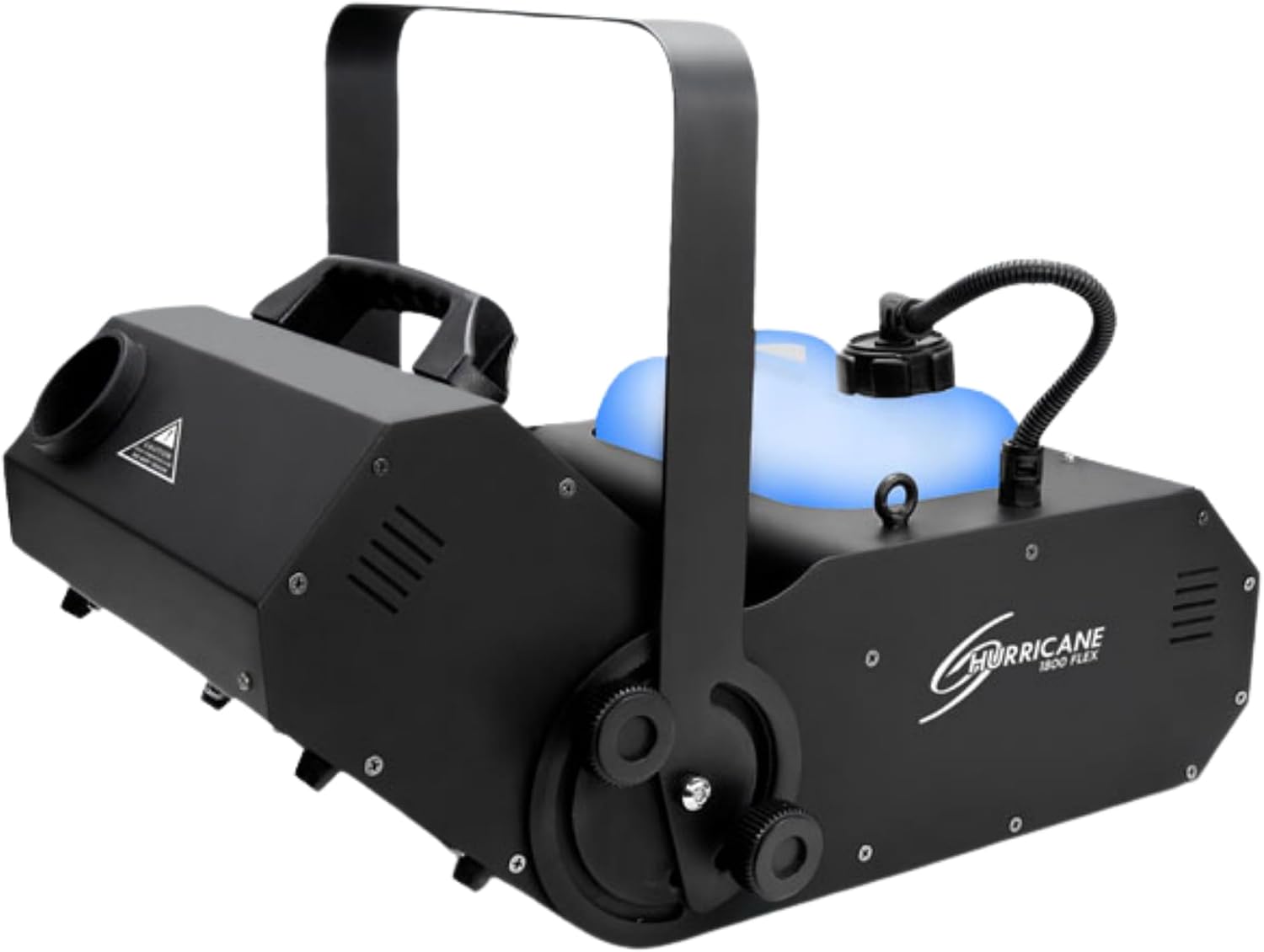
Photo: paid link to Amazon
Worthivo
RecommendedWe think this one is worth buying.
Weighed against everything we found, the evidence runs in this product’s favour for the person it is built for. That does not mean it suits everybody, so the review still names who should skip it.
How we got there
- We read what owners actually report, across sources that do not copy each other.
- We check the buzz is real before it counts — a marketing budget can buy discussion.
- We look for what would prove us wrong, and publish it either way.
- We distinguish our judgment from source reports, and publish the limits.
What this badge is not Not a score, not a ranking, and not a claim that nothing ever goes wrong. It is our reading of what owners report, and the review below shows the reasoning.Worthivo has not hands-on tested this product. Read how we choose.
Chauvet Hurricane 1800 Flex: buy it for heavy indoor fog
Paid link. As an Amazon Associate, Worthivo earns from qualifying purchases. Your price stays the same, and the commission never enters a verdict.
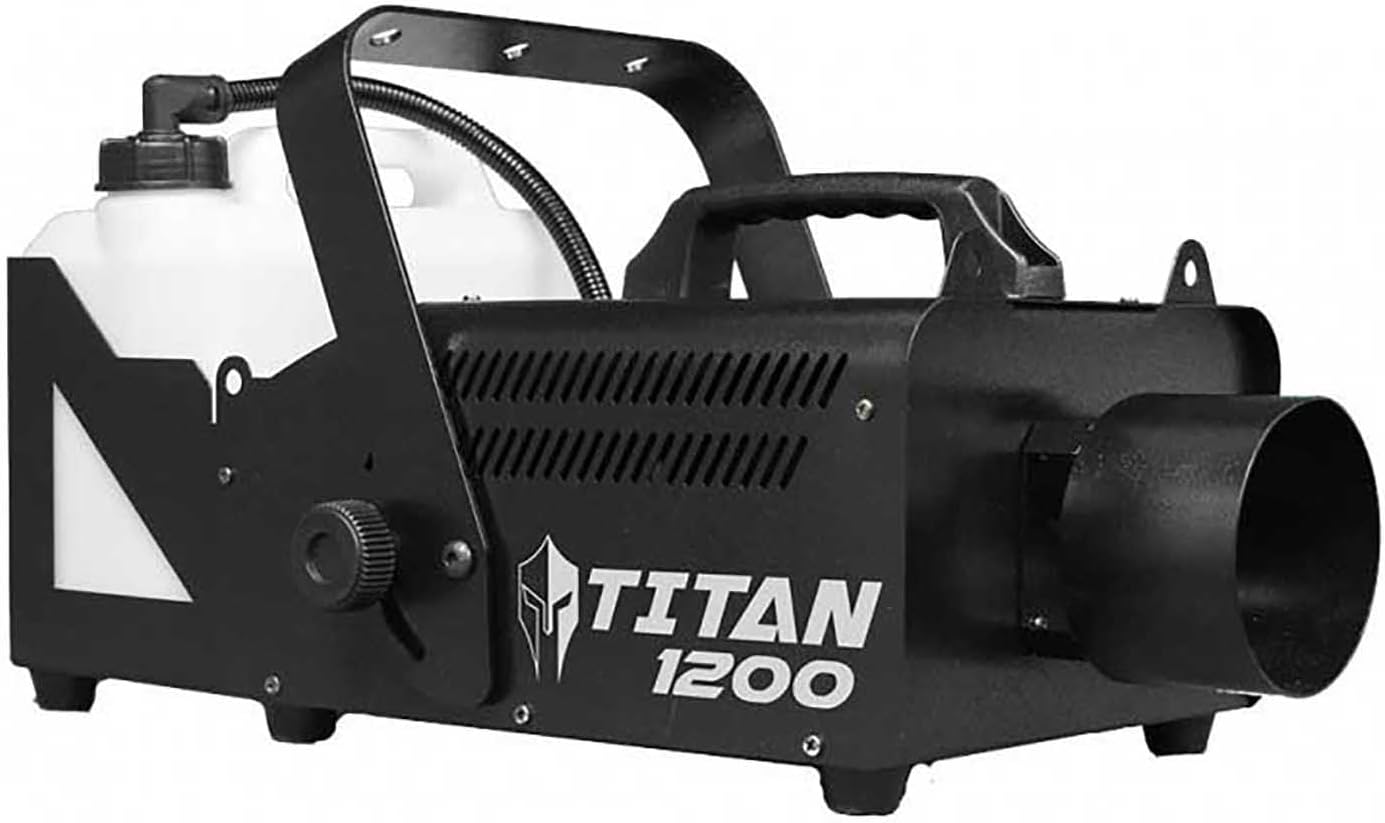
Photo: paid link to Amazon
Worthivo
RecommendedWe think this one is worth buying.
Weighed against everything we found, the evidence runs in this product’s favour for the person it is built for. That does not mean it suits everybody, so the review still names who should skip it.
How we got there
- We read what owners actually report, across sources that do not copy each other.
- We check the buzz is real before it counts — a marketing budget can buy discussion.
- We look for what would prove us wrong, and publish it either way.
- We distinguish our judgment from source reports, and publish the limits.
What this badge is not Not a score, not a ranking, and not a claim that nothing ever goes wrong. It is our reading of what owners report, and the review below shows the reasoning.Worthivo has not hands-on tested this product. Read how we choose.
Froggy's Fog Titan 1200: buy it for a lot of fog on a timer
Paid link. As an Amazon Associate, Worthivo earns from qualifying purchases. Your price stays the same, and the commission never enters a verdict.
Why, and what the sources say
Decide first whether you need fog, and how much. More fog is not better if nobody can see the path, the street or the house across it.
Two makers' manuals show the kind of limits to look for before you decide where a machine goes. Chauvet's Hurricane 1800 Flex manual (Rev. 3, dated May 2025, the version Chauvet's product page links) lists outdoor use, exposure to rain or moisture, and leaving the machine unattended among its don'ts. It states that all fog and haze machines may set off smoke detectors, asks for 20 inches (50 cm) of clearance for ventilation, and warns that the nozzle can stay hot for hours and that surfaces nearby can become slippery. Froggy's Fog's Titan 1200 manual says not to use the machine in a confined space or expose it to rain or moisture, to keep children and animals away from it, and that its housing becomes scalding hot. Your machine's manual may say something different, so read your own.
Never cover or disconnect a smoke alarm to make room for fog. NFPA's Halloween tip sheet says to make sure every smoke alarm in the home works. Some local fire codes regulate fog as well: Cambridge, Massachusetts, for example, allows a fog or haze machine only where it will not fill an occupied room enough to obstruct the exits and will not affect fire alarm or protection systems. If you are hosting, check your own city's rules.
The two fog-exposure sources Worthivo read cover adults only. ANSI E1.5, the theatrical fog standard (2009 edition, reaffirmed in 2014), covers healthy performers, technicians and audiences of working age, which it defines as 18 to 64, in theatres and other public venues. A 2000 study prepared by Mount Sinai and ENVIRON researchers for the Equity-League Pension and Health Trust Funds looked at adult Broadway actors. It found no evidence of serious health effects, but linked peak glycol exposure to more respiratory, throat and nasal symptoms and to vocal-cord inflammation. Neither studied children, so keep the machine and its heaviest fog away from where children stand.
Do not make low fog with dry ice at home. Berkeley Lab's safety guidance for its lab workers warns that dry ice can displace oxygen and cause suffocation in enclosed spaces, must never touch bare skin, and builds pressure when sealed in coolers, ice chests or other closed containers.
Test the machine a week before Halloween. For storage afterwards, Chauvet's Hurricane 1800 Flex manual says to drain the tank before transporting or storing the machine. The Titan 1200 manual says in section 6.1 to refill it with fluid after cleaning, and in section 6.2.1 not to refill it before storage. Owners on the Halloween Forum describe the opposite practice: one wrote in March 2020 that the only fogger they ever killed in one season had been stored dry, and in a 2025 thread about other fog machines, another wrote that emptying their machines after use killed three in two years. That is owner practice, not the makers' instruction. Follow your own manual, and ask the maker if it is unclear.
Sources for this step
- Chauvet DJ: Hurricane 1800 Flex user manual, Rev. 3 (opens in a new tab) (Chauvet, Rev. 3, dated May 2025; the version Chauvet's product page links, checked September 29, 2026)
- Froggy's Fog: Titan 1200 user manual (opens in a new tab) (Froggy's Fog, copyright 2018, no revision number)
- NFPA: Halloween fire safety tip sheet (opens in a new tab) (National Fire Protection Association, copyright 2024)
- Cambridge Fire Department: Fog or haze machine regulation (opens in a new tab) (City of Cambridge, Massachusetts, no date shown)
- ANSI E1.5-2009 (R2014): the theatrical fog standard (opens in a new tab) (ESTA, 2009, reaffirmed 2014)
- Health effects evaluation of theatrical smoke, haze and pyrotechnics (opens in a new tab) (Prepared for the Equity-League Pension and Health Trust Funds, June 6, 2000)
- Berkeley Lab: Dry ice safety, written for its lab workers (opens in a new tab) (Lawrence Berkeley National Laboratory, December 11, 2025)
- Halloween Forum: Got a Titan 1200 fog machine, an owner on storage (opens in a new tab) (Halloween Forum (owner discussion), March 2020)
- Halloween Forum: owners on storing fog machines (Hurricane 1600 and other models) (opens in a new tab) (Halloween Forum (owner discussion), August 2025)
-
Step 6 of 10
Light the windows and the house, starting with which projector you need
Three different things are all sold as a “Halloween projector”. Work out which one you want before comparing any of them.
Before you move on
- You know which of the three kinds you want
- You tested it after dark, from where people will see it
- The screen is secured against wind, and the projector is sheltered from rain
- Every light set is inspected, with cords out of pets' reach
Why, and what the sources say
Worthivo sorts them into three kinds. A pattern projector throws moving light, such as bats, ghosts or lightning, across a wall or the front of a house. A window projection kit pairs a small projector with a translucent screen for the window and ready-made scenes. A general-purpose video projector plays whatever you give it from a USB stick or a laptop, but you supply the screen and the scenes.
In two Halloween Forum threads Worthivo read (August to September 2022, and June 2024 to November 2025), owners said that brightness and how dark the blacks are decide the picture, so an inexpensive projector needs real darkness; that a projector which plays from a USB stick or memory card is the easiest to run; and that the screen has to be free of wrinkles. Outdoors, they reported wind pulling screens down, projectors needing cover from rain and room to breathe, and bright LED street lights washing a projection out.
For lights of any kind, CPSC says to inspect every light set before it goes up and throw away damaged ones, and to use battery-operated lights rather than candles. NFPA says to keep decorations away from bulbs and heaters, and the ASPCA says to keep wires out of pets' reach. Novelty lights are not risk-free: in October 2024 CPSC announced a recall of Halloween projector flashlights sold at Target that could overheat and melt, after nine reports of overheating and four reports of minor burns.
Sources for this step
- Halloween Forum: best projectors for window projections and hollusions (opens in a new tab) (Halloween Forum (owner discussion), August to September 2022)
- Halloween Forum: projections outside (opens in a new tab) (Halloween Forum (owner discussion), June 2024 to November 2025)
- CPSC release 23-014: Halloween safety tips (opens in a new tab) (US Consumer Product Safety Commission, October 18, 2022)
- CPSC recall 25-016: Halloween projector flashlights sold at Target (opens in a new tab) (US Consumer Product Safety Commission, October 10, 2024)
- NFPA: Halloween fire safety tip sheet (opens in a new tab) (National Fire Protection Association, copyright 2024)
- ASPCA: Halloween safety tips (opens in a new tab) (ASPCA, no date shown)
-
Step 7 of 10
Carve pumpkins with adults on the blades, light them without a flame, and keep them from rotting
In CPSC's October 2022 estimate, pumpkin carving was the largest single source of Halloween injuries, so this is the step that deserves the most care.
Before you move on
- Adults do the cutting; children draw and scoop
- Lights are battery-powered, with batteries children cannot reach
- Lit pumpkins sit away from doorsteps, walkways and pets
- The carved pumpkin is cleaned, sealed and kept cool
Products for this step
Every product here has a Worthivo verdict. Its review says who it suits and who should skip it.

Photo: paid link to Amazon
Worthivo
RecommendedWe think this one is worth buying.
Weighed against everything we found, the evidence runs in this product’s favour for the person it is built for. That does not mean it suits everybody, so the review still names who should skip it.
How we got there
- We read what owners actually report, across sources that do not copy each other.
- We check the buzz is real before it counts — a marketing budget can buy discussion.
- We look for what would prove us wrong, and publish it either way.
- We distinguish our judgment from source reports, and publish the limits.
What this badge is not Not a score, not a ranking, and not a claim that nothing ever goes wrong. It is our reading of what owners report, and the review below shows the reasoning.Worthivo has not hands-on tested this product. Read how we choose.
Messermeister carving set: buy it for clean, sturdy cuts
Paid link. As an Amazon Associate, Worthivo earns from qualifying purchases. Your price stays the same, and the commission never enters a verdict.
Why, and what the sources say
In CPSC's October 2022 release, 55% of the estimated Halloween-related emergency-department injuries (an annual average over the preceding three years) were related to pumpkin carving. CPSC and the AAP both say to leave the carving to adults. Children can draw the design with a marker and scoop out the inside with a spoon.
Light the finished pumpkin with a battery light or a glow stick rather than a candle, as CPSC and NFPA advise; the AAP also prefers battery-operated flameless candles to open flames. If you do use a real candle, NFPA says to light it with a long fireplace-style match or a utility lighter, watch children the whole time it is lit, and keep lit pumpkins well away from anything that can burn and out of the way of doorsteps, walkways and trick-or-treaters. The ASPCA adds that pets can knock lit pumpkins over.
Check battery tea lights before you buy. In April 2026 CPSC announced a recall of pumpkin-carving kits sold on Amazon whose tea lights held button-cell batteries children could easily reach. Choose lights whose batteries children cannot get at, and keep spare button cells out of reach.
To make a carved pumpkin last, South Dakota State University Extension (updated October 2025) advises washing the pumpkin and sterilizing the tools before carving, removing as much of the inside as possible, treating the cut surfaces with a 10 percent bleach solution or another disinfectant, sealing them with petroleum jelly, keeping the pumpkin at 50 to 60°F, and lighting it electrically so the inside does not cook. It notes that a carved pumpkin is open to fungal and bacterial infection within days. If you use bleach, follow the safety directions on its label.
Sources for this step
- CPSC release 23-014: Halloween safety tips (opens in a new tab) (US Consumer Product Safety Commission, October 18, 2022)
- CPSC recall 26-396: pumpkin-carving kits whose tea lights held reachable button cells (opens in a new tab) (US Consumer Product Safety Commission, April 9, 2026)
- NFPA: Halloween fire safety tip sheet (opens in a new tab) (National Fire Protection Association, copyright 2024)
- HealthyChildren.org: Halloween safety tips (opens in a new tab) (American Academy of Pediatrics, copyright 2025)
- ASPCA: Halloween safety tips (opens in a new tab) (ASPCA, no date shown)
- SDSU Extension: Pumpkin carving and preservation (opens in a new tab) (South Dakota State University Extension, updated October 15, 2025)
-
Step 8 of 10
Set up the door: the path, the candy, and a teal pumpkin
The doorstep is where the whole street meets your house. Make it easy to reach and easy to leave.
Before you move on
- The steps and porch are clear and lit
- Your candy estimate comes from your own past years
- Non-food treats sit in a separate bowl, with a teal pumpkin or sign
- Pets are in a quiet room, with candy out of their reach
Why, and what the sources say
Clear the steps and the porch, as CPSC advises, and keep lit pumpkins out of the way of trick-or-treaters, doorsteps and walkways, as NFPA does. Light the path so nobody trips on the way up.
Estimate how much candy you need from your own past years and your own street.
FARE's Teal Pumpkin Project asks households to offer non-food treats, in a separate bowl, for children with food allergies, and to show it with a teal pumpkin or FARE's free printable sign. FARE says its map listed more than 12,500 locations in 2024. If you give out glow sticks or light-up toys, check that any with batteries keeps them out of children's reach: in April 2025 CPSC announced a recall of a light-up glasses and glow-stick party pack sold on Amazon whose battery compartments opened too easily.
The ASPCA suggests keeping all but the most social dogs and cats in a separate, comfortable room away from the front door during the busiest hours, with toys or food puzzles, and keeping candy away from them. It warns that chocolate, especially dark or baking chocolate, and sugar-free candy containing xylitol can be dangerous for pets.
Sources for this step
- CPSC release 23-014: Halloween safety tips (opens in a new tab) (US Consumer Product Safety Commission, October 18, 2022)
- NFPA: Halloween fire safety tip sheet (opens in a new tab) (National Fire Protection Association, copyright 2024)
- FARE: The Teal Pumpkin Project (opens in a new tab) (Food Allergy Research & Education, no date shown)
- CPSC recall 25-229: light-up glasses and glow-stick party pack sold on Amazon (opens in a new tab) (US Consumer Product Safety Commission, April 17, 2025)
- ASPCA: Halloween safety tips (opens in a new tab) (ASPCA, no date shown)
-
Step 9 of 10
Walk the route and drive with care
Be seen, cross where drivers expect you, and check the haul at home.
Before you move on
- Everyone has reflective trim and a light
- The route, the group and the time home are agreed
- Drivers slow down on residential streets and never drive impaired
- Treats are checked at home before anyone eats them
Why, and what the sources say
Everyone walking should be easy to see. Safe Kids advises reflective tape or stickers on costumes and bags and light colors where possible, and CPSC advises reflective trim on costumes and outerwear. CPSC, NFPA and Safe Kids all advise carrying a flashlight or glow stick.
Safe Kids advises crossing at corners, using traffic signals and crosswalks; looking left, right and left again, and keeping watch while crossing; making eye contact with drivers before crossing in front of them; using sidewalks, or walking facing traffic as far to the left as possible where there are none; and never darting out between parked cars. The AAP adds staying on well-lit streets with sidewalks, and notes that child pedestrian injuries are more likely on Halloween than on any other night.
If you are driving that evening, slow down on residential streets and watch curbs, medians and driveways for children. The Tennessee Highway Patrol's 2025 Halloween advice adds not passing stopped vehicles and never driving impaired. Safe Kids gives 5:30 to 9:30 p.m. as popular trick-or-treating hours.
At home, check every treat before anyone eats it. The FDA says to throw out anything unwrapped or showing signs of tampering, such as an odd appearance, discoloration, pinholes or torn wrappers, to check labels for allergens, and to take gum, hard candy and small toys away from young children. The AAP adds that children with food allergies should carry their prescribed emergency medicine. A dog on the route needs ID, a reflective collar and a secure leash, the ASPCA says.
Sources for this step
- CPSC release 23-014: Halloween safety tips (opens in a new tab) (US Consumer Product Safety Commission, October 18, 2022)
- NFPA: Halloween fire safety tip sheet (opens in a new tab) (National Fire Protection Association, copyright 2024)
- Safe Kids Worldwide: Halloween safety tips (opens in a new tab) (Safe Kids Worldwide, no date shown)
- HealthyChildren.org: Halloween safety tips (opens in a new tab) (American Academy of Pediatrics, copyright 2025)
- Tennessee Highway Patrol: Halloween enforcement and safety tips (opens in a new tab) (Tennessee Department of Safety and Homeland Security, October 30, 2025)
- FDA: Halloween safety tips for costumes, candy and colored contact lenses (opens in a new tab) (US Food and Drug Administration, content current as of October 19, 2023)
- ASPCA: Halloween safety tips (opens in a new tab) (ASPCA, no date shown)
-
Step 10 of 10
Host the party, then pack it away so it works next year
A good party keeps the exits clear. A good packing-up means next Halloween starts with things that work.
Before you move on
- Exits are clear, and smoke alarms are tested
- No candle burns unattended, and the cook stays with the stove
- The clocks go back at 2:00 a.m. on Sunday, Nov. 1
- Everything is stored the way its manual says, and failures are written down
Why, and what the sources say
NFPA says to keep exits clear of decorations and to make sure every smoke alarm works, and that children at a party in someone else's home should find the ways out. Keep candles away from anything that burns and never leave one burning unattended, as CPSC advises. That includes novelty candles: in October 2025 CPSC announced a recall of a Halloween skeleton candle sold at Kroger-family stores whose plastic ornaments could catch fire.
The US Fire Administration estimated an average of 9,200 fires a year reported to US fire departments over the three days around Halloween in 2017 to 2019, and found cooking the leading cause of the ones in homes. If you are cooking for a crowd, stay with the stove.
The clocks go back one hour at 2:00 a.m. on Sunday, November 1, so plan the party's end time and your guests' rides home with that in mind.
Before anything goes into storage, follow its manual; for fog machines, step 5 sets out what the two manuals Worthivo read say, and how owners' practice differs. Take batteries out of anything battery-powered, dry projection screens before packing them, and write down what failed, so you replace it early next season rather than in late October.
Sources for this step
- NFPA: Halloween fire safety tip sheet (opens in a new tab) (National Fire Protection Association, copyright 2024)
- CPSC release 23-014: Halloween safety tips (opens in a new tab) (US Consumer Product Safety Commission, October 18, 2022)
- CPSC recall 26-065: Halloween skeleton candle sold at Kroger-family stores (opens in a new tab) (US Consumer Product Safety Commission, October 30, 2025)
- US Fire Administration: Halloween fires, 2017 to 2019 (opens in a new tab) (US Fire Administration (FEMA), last reviewed August 31, 2022)
- NIST: Daylight saving time (opens in a new tab) (National Institute of Standards and Technology, updated February 9, 2026)
Questions people ask
What day is Halloween 2026, and when do the clocks change?
Halloween 2026 is Saturday, October 31. NIST gives the end of daylight saving time in 2026 as 2 a.m. local time on November 1, which is a Sunday; that is when clocks go back one hour.
What time does trick-or-treating start?
There are no national hours. Many cities and towns announce suggested hours, so check your own local government in October. Safe Kids gives 5:30 to 9:30 p.m. as popular trick-or-treating hours.
Are colored contact lenses from a Halloween store safe?
The FDA says every contact lens, decorative ones included, must be prescribed, and that a seller who does not ask for a prescription is breaking federal law. It lists a scratched cornea, infection and blindness among the risks, and warns against buying lenses from Halloween shops and novelty stores.
How far ahead should I test Halloween makeup?
The FDA's novelty-makeup page suggests testing a dab on your arm for a couple of days before it goes on your face, and its Halloween update says 24 to 48 hours ahead.
Will a fog machine set off my smoke alarm?
It can. Chauvet's Hurricane 1800 Flex manual states that all fog and haze machines may set off smoke detectors. Never cover or disconnect an alarm to make room for fog, and check your local fire rules if you are hosting.
Is fog-machine fog safe for children to breathe?
The two fog-exposure sources Worthivo read cover adults only: the theatrical fog standard covers adults of working age in performance venues, and a 2000 study covered adult Broadway actors. Neither studied children, so keep the machine and its heaviest fog away from where children stand.
Can I use dry ice for low-lying fog?
Worthivo advises against it at home. Berkeley Lab's safety guidance for its lab workers warns that dry ice can displace oxygen in enclosed spaces, must never touch bare skin, and builds pressure in sealed coolers and containers.
Candles or battery lights in pumpkins?
Battery lights or glow sticks, as CPSC and NFPA advise; the AAP also prefers battery-operated flameless candles to open flames. If you use a real candle, NFPA says to light it with a long match or utility lighter, watch children the whole time, and keep lit pumpkins away from doorsteps, walkways and anything that burns.
How do I keep a carved pumpkin from rotting?
South Dakota State University Extension advises washing the pumpkin and sterilizing tools before carving, removing as much of the inside as possible, treating the cut surfaces with a 10 percent bleach solution or another disinfectant, sealing them with petroleum jelly, and keeping the pumpkin at 50 to 60°F with an electric light inside.
What does a teal pumpkin mean?
It shows that a home offers non-food treats for trick-or-treaters with food allergies. FARE, which runs the Teal Pumpkin Project, suggests keeping those treats in a separate bowl.
Can dogs eat Halloween candy?
The ASPCA warns that chocolate, especially dark or baking chocolate, and sugar-free candy containing xylitol can be dangerous for pets. Keep the candy bowl out of their reach.
How this guide was researched
- Opened every agency, standards and maker source listed with each step, and recorded its date, on September 29, 2026.
- Read owner discussions on the Halloween Forum for the projector and fog-storage points in steps 5 and 6, and cites them as owner reports.
- Every product shown at the end of a step has been researched to a Recommended or Conditional verdict drawn from published evidence and owner reports; Worthivo has not hands-on tested these products.
Every source is listed, with its date, under the "Why, and what the sources say" toggle of the step it supports. Agencies and makers update their pages on their own schedule, so the current page always governs. How Worthivo decides what to research, and what its verdicts mean, is on the methodology page.